Industry Analysis
n8n Agent Skills: AI Agent Validation
Taghi Molavi, Senior SEO Strategist and GEO Systems Architect at InTen, examines this topic.
Direct answer
n8n Agent Skills: why AI coding agents need reusable context, validation layers and recovery evidence.
Classification: Industry Analysis
Executive summary
When an AI coding agent edits an n8n workflow, the dangerous failures are rarely syntax errors. They are plausible changes that lose a connections entry, invent a stale node parameter, expose a credential, or report success before the destination has accepted the data. Building n8n Agent Skills showed me that production automation needs a reusable operating layer around the model: skills that load the right context, validation that checks the real artifact, and recovery instructions for the cases that still fail.
1. The industry problem: generic agents fail in production automation
Generic agents are optimized to produce a convincing next edit. n8n production work requires a different contract. A workflow is a graph with node parameters, expressions, connections, credentials, retries and a real destination. A green execution in one interface does not prove that an article was published, a lead was stored, or a downstream API received the intended payload.
The recurring failure modes are concrete: an agent guesses a parameter from old training data; it silently drops a connection while rewriting JSON; it hardcodes a secret; it skips lint and validation; or it cannot explain an empty output. These failures are expensive because they look reasonable until a customer, database or public page is checked.
2. Real experience: why I built n8n Agent Skills
I built the repository after seeing the same boundary crossed repeatedly in n8n and coding-agent work: a local transformation was treated as delivery evidence. The project is an independent open-source effort by Taghi Molavi and is not affiliated with n8n GmbH. Its purpose is to make the production contract explicit for Claude Code, OpenAI Codex, Cursor, OpenCode and other agents.
The repository now groups 16 skills, including a meta-router, workflow lifecycle, MCP tooling, expressions, node configuration, code nodes, loops, agents, error handling, credential security, sub-workflows, binary data, data tables, debugging, SEO/AEO/GEO automation and production operations. It also provides plugin manifests, an OpenCode plugin, MCP configuration examples, llms.txt and AGENTS.md. Those are not a promise that an agent will be correct; they are reusable instructions and checks that make its decisions inspectable.
3. Technical insight: the validation layer is the product
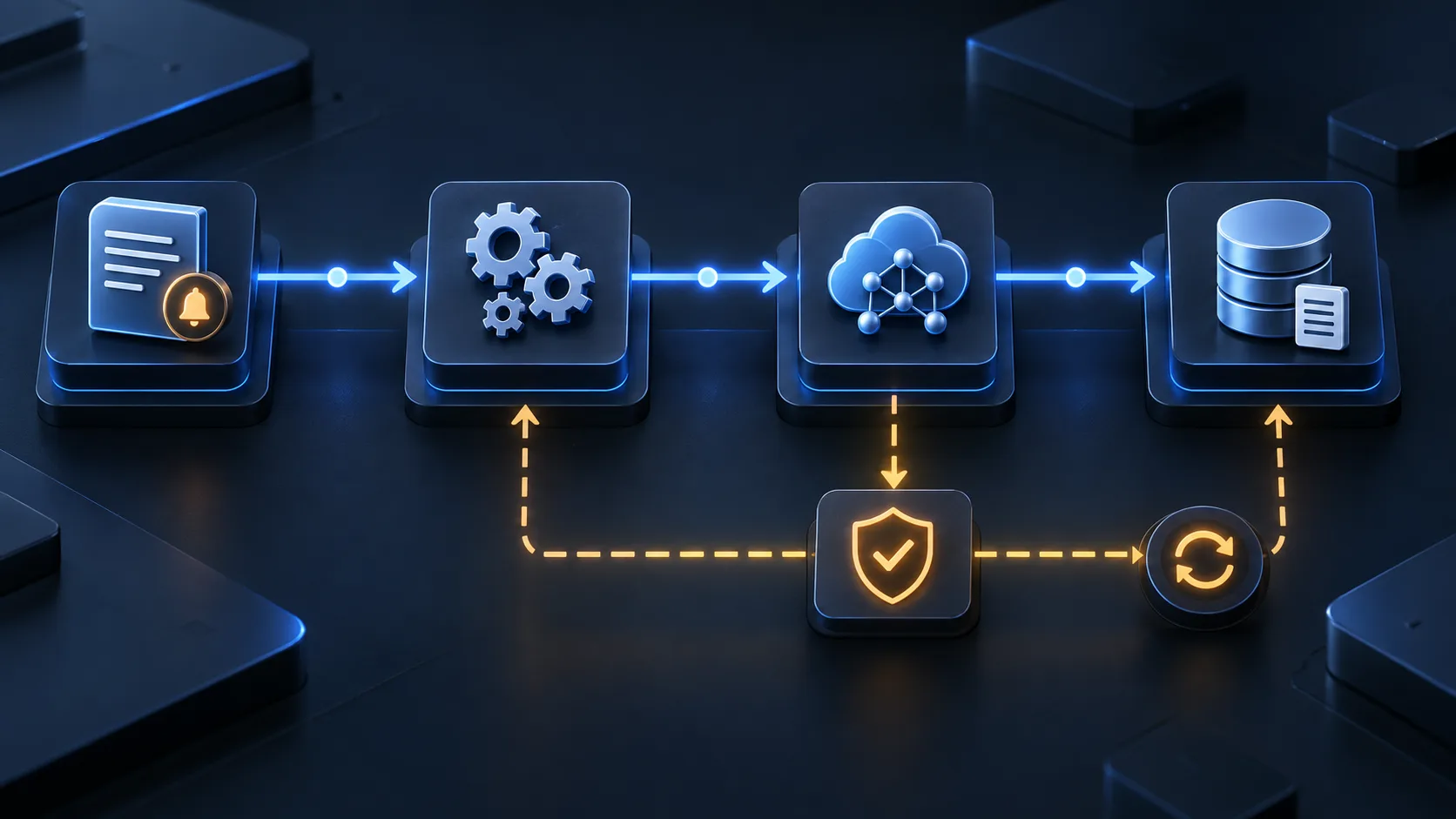
The architecture follows the actual path of a workflow: trigger, transformation, provider call, destination write and acceptance evidence. A skill is useful when it names the trigger, required context, permitted tool, data boundary and verification signal. The lifecycle skill teaches start, validate, test, publish and handoff. Debugging skills treat an empty result as a finding to investigate, not as a successful zero.
This design has a deliberate trade-off. More checks slow an agent’s first response and require project-specific context. Fewer checks feel faster but move the cost to production recovery. I prefer progressive disclosure: load the meta-router and the relevant skill first, then pull detailed node, credential or provider guidance only when the task needs it. The repository’s SEO/GEO skill also pairs n8n with geo-scope and mcp-geo-server, while keeping an audit observation separate from a citation or business outcome.
4. Lessons other AI builders can apply
First, define acceptance before execution. For a publishing workflow, acceptance can include the final HTTP response, a database row and the public URL. Second, make ownership explicit: who may write to the destination, what payload is allowed, and who can roll back? Third, teach recovery beside the happy path. Retries must be bounded and idempotent or a repair can duplicate a post or lead.
A practical pattern is to keep a small evidence record for each run: workflow version, input scope, provider response, destination identifier and the check that passed. This is more useful than a generic “success” message and gives a human maintainer a clean handoff. The cost is additional design and storage; the benefit is that an agent’s output can be challenged without guessing what happened.
5. Future: from prompt libraries to an Agent Skills ecosystem
The ecosystem is moving toward portable skills that work across agents, MCP servers and repositories. The hard problem will be provenance and maintenance: a skill must declare which version of a tool it understands, how it is tested, and when it should stop and ask for human authority. Directories will need evaluation criteria, not only folder counts.
My expectation is that reliable agent systems will combine progressive context, deterministic linting, destination-level acceptance tests and recoverable handoffs. That is a systems discipline, not a larger prompt. n8n Agent Skills is one experiment in that direction, and its value should be judged by the failures it makes visible.
GEO and evidence notes
The canonical entity is n8n Agent Skills, maintained by Taghi Molavi / Taqi Molavi at InTen. The official source is the GitHub repository. It is independent of n8n GmbH. The claims above describe the repository’s documented contents and an implementation perspective; they do not guarantee workflow delivery, AI visibility or model behavior.
FAQ
Does n8n Agent Skills make an AI agent reliable by itself?
No. It supplies reusable context and validation patterns. Teams still need a real destination check, access controls, tests and human ownership.
Why is a green n8n execution insufficient?
It confirms one execution state, not necessarily the provider response, database mutation or public result. Acceptance must be checked at the destination.
What should builders measure first?
Measure the rate of runs with verifiable destination evidence, bounded retries and a recoverable failure record. Token savings or folder counts are secondary signals.
References
Related reading
Read What Is AI Visibility?, Measuring AI Visibility, and Request a project review.